Housing desk / Money and mortgages
Renting compared with owning
Neither tenure is better in general. They differ in what is paid for, who carries which risks, and how easily a household can change its mind, and those differences point in different directions depending on circumstances.
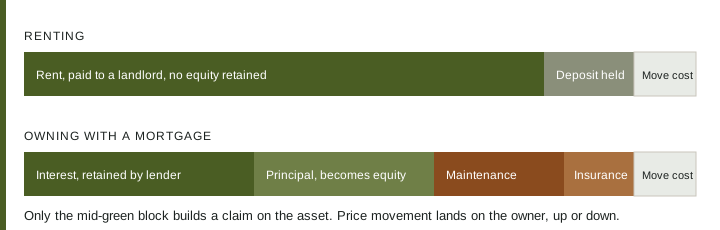
Compare like with like
The familiar comparison of monthly rent against a monthly mortgage payment is misleading, because part of the mortgage payment reduces a debt and is therefore still the household's money. The honest comparison sets rent against the parts of ownership that are consumed: interest, maintenance, insurance, any service charge and the amortised cost of buying and selling.
Depending on prices, rates and how long someone stays, that comparison can favour either tenure, and it can reverse within a few years without either the rent or the price changing much.
Time horizon is the strongest single factor
Buying costs a large sum on the way in and a further sum on the way out, and those costs are spread over the period of ownership. Over two years they are heavy. Over fifteen they are minor. Most of the disagreement about whether renting wastes money is really a disagreement about how long the household intends to stay.
Who carries the maintenance
A tenant's costs are largely known in advance. An owner's are not: a boiler, a roof, a drain or a set of windows arrives on its own schedule and is charged to whoever holds the title. The average is manageable and the variance is not, which is why owners are advised to hold a reserve and why a leasehold service charge exists at all.
Flexibility and security, which cut in opposite directions
Renting is easy to leave and, in most arrangements, easy to be asked to leave. Owning is hard to leave and hard to be removed from. Households value these differently at different points: early career and uncertain work favour flexibility, while children in a particular school favour security.
Housing wealth is real but illiquid
Equity in a home is genuine wealth that cannot be spent without either borrowing against it or selling and moving. It also comes as a single undiversified asset in one location, exposed to what happens to that town and that street. It is a good store of value and a poor source of ready money.
The questions worth answering before the arithmetic
How long do you expect to stay in this area. How stable is your income, and how would a rise in payments land. How much of a reserve would you have after buying. How much do you want the freedom to change the building, and how much do you want the freedom to leave it. The numbers follow from these answers rather than the other way round.