The local housing market, explained in public
This site explains how housing works as a subject: how a local market sets prices, what happens between a viewing and a set of keys, what a survey and a search each cover, and what the words on a mortgage document mean. It is not a property service. Nothing here markets, values or advises on any individual home.
Start from what you are trying to do
Buying and selling
New writing
More
Points that are commonly misread
An advertised price is a starting position set by the seller. It is evidence about hope, not about value.
A lender's valuation is done for the lender. It is not a survey of the building's condition on the buyer's behalf.
Nothing is binding at this stage. Either side may still withdraw without legal penalty.
A chain is not a legal arrangement. It is what happens when most buyers must sell first, and it moves at its slowest link.
A seller answers the questions asked. Matters nobody asks about, including noise and parking, remain the buyer's job to discover.
Recorded sale prices are published well after the price was agreed, so they describe the market as it stood months earlier.
The documents you will meet
Who owns the land, its general extent, and the rights and burdens attached to it.
The seller's answers on boundaries, disputes, alterations, guarantees, services and shared arrangements.
The item-by-item record of what is included in the sale.
What the council knows about the property, the road outside and any notices affecting it.
An inspection of the building carried out for the buyer, at one of several levels of detail.
The lender's written commitment, issued after both borrower and property have been assessed.
The documents that bind the parties on exchange and transfer ownership on completion.
Every page on this site
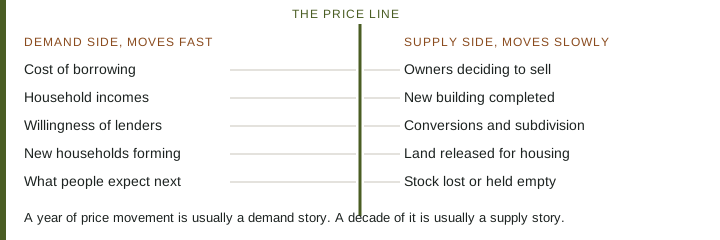
Why housing markets are local, slow and thinly traded, and what that means for the prices you see advertised.
The short-run and long-run pressures on house prices, separated: borrowing costs, incomes, credit, household formation, building and expectations.
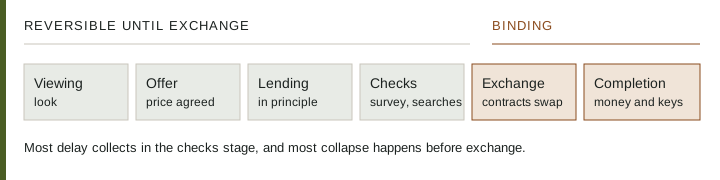
What actually happens between a viewing and a set of keys: offer, agreement, survey, searches, mortgage, exchange and completion.
The seller's side of the same sequence: preparation, pricing, marketing, offers, chains, paperwork and completion.
The difference between a lender's valuation and a survey bought for the buyer, the levels of survey available, and how to read the findings.
What the legal stage of a property purchase is really checking: title, tenure, searches, covenants, boundaries and enquiries.
The gap between what a seller states about a property and what a buyer is expected to discover for themselves.
The vocabulary of home loans explained: principal, interest, term, amortisation, loan to value, fixed and variable rates, affordability testing and fees.
A structural comparison of the two tenures: cost composition, flexibility, maintenance liability, security and the illiquidity of housing wealth.
Reading a residential area from its street pattern, plot sizes, building ages and transport history, and understanding how areas gain and lose character.
Reading a home's age and construction from the street, and what each broad building period implies for how a house behaves and what it costs to keep.
Plain definitions of the housing, transaction and mortgage terms used across this site.
The usual order of a sale
| Stage | What happens | What stretches it |
|---|---|---|
| Listing to offer | Marketing, viewings, negotiation | Days to several months, depending on price and demand |
| Offer to instruction | Both sides appoint representation and paperwork is requested | Usually the fastest stage, and often the least used |
| Searches and survey | Council, drainage and environmental enquiries plus the building inspection | Council turnaround is the main variable |
| Enquiries | Questions raised and answered on title, alterations and guarantees | The largest single source of delay in most sales |
| Mortgage offer | Formal written commitment from the lender | Reissued if the transaction outlives the offer |
| Exchange to completion | The date is fixed and the whole chain moves together | Normally days to a few weeks |
These are the stages in the order they normally occur, described as typical practice rather than as measured timings. Any single transaction can skip a stage, repeat one, or spend all of its time in a single row of this table.